
Board
Of Directors

DR. OMKAR P. HERLEKAR
Chairman and Managing Director
Dr. Omkar P. Herlekar is the Chairman and Managing Director of Lasa Supergenerics Limited. Upon assuming the leadership of Lasa, Dr. Herlekar charted a multi-pronged approach for its corporate growth. Envisioning a global presence for the group, Dr. Herlekar played a pivotal role in establishing marketing set-up across and outside India. Lasa places immense focus on research. Dr. Herlekar has played a pivotal role in embryonic the group’s ‘Catalyst Chemistry’ division that focuses on development of veterinary APIs and breakthrough innovations. His contributions are widely acclaimed in the industry circles. Under his leadership, Lasa achieved new milestones and offered several innovations with the help of ‘backward integration’. Herlekar’s visionary and astute entrepreneurial leadership resulted in Lasa emerging as one of the leading animal healthcare conglomerates in India, driven by research, and strategic thinking on a global scale. His clear vision, steady guidance and boundless passion for organic chemistry serve as catalysts for the steady and continued expansion of the group. He also holds number of ‘process patents’ to his credit. Dr. Herlekar spearheads business development, expansion initiatives, financial management, investment and regulatory affairs. He has a team of experienced technocrats who are dedicated towards scaling the group to greater heights through innovation and excellence, thereby creating value for its stakeholders.
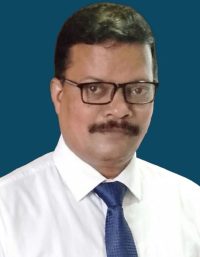
Mr. Ganesh Poddar
Director
Mr. Ganesh Poddar has been appointed as a Director of the Company and brings with him a broad-based understanding of business operations and commercial practices.
He has exposure to banking-related processes, including coordination with financial institutions, understanding of routine banking formalities, and facilitation of documentation and compliance-related interactions. His experience enables him to contribute constructively in matters involving financial coordination and operational follow-ups.
Mr. Poddar has also been actively involved in business travel, exploring and assessing potential business opportunities, liaising with various stakeholders, and supporting the Company in identifying avenues for growth and expansion. His engagement in such activities provides practical insight into market dynamics and evolving commercial requirements.

Mr. Ketan Bhau Songal
Director
Mr. Ketan Bhau Songal belongs to an Adivasi community and has been closely connected with traditional village livestock care since childhood. He has spent many years assisting farmers and shepherd families in the routine handling of cows, sheep, goats, hens, and small animals. His experience includes helping with everyday tasks such as basic animal upkeep, observing animal wellbeing, and supporting households during seasonal farming and herding activities.
With his simple, ground-level understanding and deep trust within rural communities, he represents the interests of village livestock owners on the Board. His role is purely advisory in nature, focused on community welfare and rural livelihood representation.
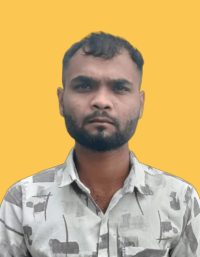
Director
Mr. Pravin Gadalya Lachake comes from an Adivasi background and has long-standing practical involvement in rural poultry and small livestock activities. Growing up among farming families, he has regularly assisted villagers in caring for hens, chicks, goats, and cattle, supporting them with routine work such as shed maintenance, feeding patterns, and general flock handling.
He brings the voice of small poultry keepers and rural households to the Board. His contribution is community-oriented and non-technical, ensuring that the perspectives of traditional livestock farmers are respected in all discussions.
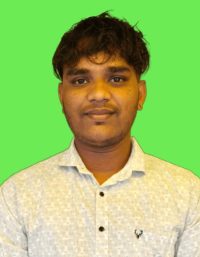
Mr. Yogesh Hari Ughada
Director
Mr. Yogesh Hari Ughada, also from an Adivasi community, has organically grown into the field of animal support by helping shepherds, cattle owners, and village homes with daily livestock care. He has assisted in managing sheep, lambs, goats, cows, and common companion animals such as dogs and cats. His experience is hands-on, grounded in day-to-day village realities, and guided by compassion for animals.
He stands as a representative of rural youth engaged in community service and basic animal care. His association with the Board is limited to offering insights into the needs and difficulties faced by small farmers and livestock keepers.
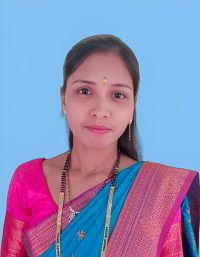
Mrs. Rekha Hemant Wakh
Director
Mrs. Rekha Hemant Wakh hails from an Adivasi community and has spent many years working with women farmers and village households involved in maintaining cows, goats, poultry, and small companion animals. She regularly supports families in simple feeding practices, household-level poultry care, and the general wellbeing of domestic animals.
Her role on the Board is to bring forward the concerns of rural women, farming families, and small livestock keepers. Her contribution is community-based, non-technical, and rooted in lived experience rather than formal training.